Tuesday, 12 February 2013

To Fix Public Education


I've been asked several times what I think the number one problem in public education is. More specifically I've been asked if I could change one thing about public education what would that be. Most people are going to assume that I would said we need to get rid of standardized testing or get rid of homework or get rid of the bloated curriculum the we are required to teach. Some might think I would say we need more technology or that every kid should have access to a device every single day they are in school. Any one of those ideas would be worthy of discussion and certainly have been. However, if we want to make real change in education I think we may have to start at square one. By square one I am referring to our teacher preparation programs.

You don't have to look very far to see first year teachers in classrooms with the deer in the headlights look. Many of them are ill prepared for the challenges of the daily job of a classroom teacher and are frankly scared out of their mind. Now that's not to say that the colleges and universities are not doing the best they can. However, what they are doing is just not good enough anymore.

For starter, let’s look at the time these individuals actually have to practice the art of teaching. How long are most student teaching experiences and how many hours are preservice teachers required to be in a classroom before they student teach? While this number varies greatly, a majority of student teaching experiences last one semester. If the college or university is on trimesters, the time is significantly shorter. While many other professions require intense internships, why is that teachers do not? Why do we not have a minimum requirement of a one-year internship for all teachers? What better way to prepare them for their first year then by giving them a first year with an experienced mentor teacher?

Another issue that comes to mind is that way in which preservice teachers are pushed on through the program regardless of their abilities. I have seen first hand student teachers that should not be left alone in a classroom with children and leave me scratching my head about how they made it this far. Why is it that we feel an obligation to push these students through even though they are not cut out for the job? Are we feeling we owe it to them because they have invested an insane amount of tuition money? Should we push a student through just because they have put their time in and “earned” it? Why not give them more experience earlier in programs and provide more critical feedback to help improve these future teachers or provide them an opportunity to seek another career path?

One issue that may not win me many fans is with the college professors themselves. Frankly, a lot of these professors are poor teachers. For me, I was a history degree major when I was studying in my undergrad. I will tell you I had some of the most brilliant historians teach my history classes. Yet being a master of history does not make you a good teacher. Nearly every single professor I had stood and delivered everyday, every class for four years. Any teacher work their paycheck knows that is not good pedagogy and certainly won’t work in a K-12 environment. Again these people were brilliant historians and scientists and mathematicians but they were not trained as teachers.

Education professors by in large are working on a model that has existed for 100 years and are continuing to perpetuate these ideals through their undergrad and even graduate programs. While the professors are pushing methods and procedures thought best practice in the 1920s, our future teachers are not in touch with current trends or movements. Do we have a place for healthy debate about educational theory in practice in our undergraduate programs? Should we? Are we more concerned about the way in which a college senior is writing a lesson plan or about what they believe about student learning and instructional practice? That is not to even mention the lack of technology training that is a whole issue unto itself.

If we want to change the system of public education in this country, it has to start at the college and university level. These are the students that will come out to be the future teachers in our country. These are the ones that have not been jaded or beat down by curriculum or incompetent administrators. They have yet to be burdened with education politics or incessant hoop jumping. Colleges and universities have a tremendous opportunity to do this.

We don’t need programs like Teach for America or any other one-stop shop cookie cutter convenient drive thru teacher prep programs. We need colleges to adapt to the changing landscape of public education. Colleges have value and have a place in preserving education in America and pushing it to where it should be.

Thursday, 10 January 2013

A New Hope

from wikipedia.com

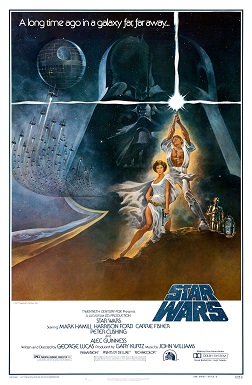
I am a big fan of the Star Wars movies and have had a love affair with the intergalactic stories since I was a small child. Recently, I was watching for the _(fill in huge number)_millionth time, EpisodeIV: A New Hope. For the three people on the planet that have not seen this movie, it is essentially a story of the Jedi (good guys) gaining power and opposing the Empire (bad guys) with a plethora of light sabers and blasters. In the title, A New Hope, it is apparent that the people of the galaxy will finally have hope against the oppressive Empire.

Lately, I have been watching, reading and following numerous conversations and discussions about the state of public education in our country. There is sadly, a great deal of negativity and anger in these discussions and interactions. I have to admit I have taken part in some of these and vented my frustration and disappointment at some of the circumstances public education has found itself in. Many of these discussions end with finger pointing at the bad students, bad teachers or bad parents. Let’s be honest, there is no shortage of things to complain about or things to point at.

However, with all that, I see hope in many places and I fear too many of us are looking past them.

Yes, kids are hurting other kids and causing physical and emotional harm. There appears to be little empathy and compassion left in our schools. Yet, I sit in a classroom right now with a handful of 6thgrade boys who all shaved their heads. Why? They are showing support for a classmate who was recently diagnosed with cancer. Is that not empathy and compassion?  I also recently came across this short video that fills me with hope for the future of our country and in humanity. Clearly there are good students out there that want to make a positive difference in their communities.


There are also a lot of negative feelings towards parents of our nation’s kids and how they are parenting. I myself have sat and wondered how some parents could do some of the things they have done to their children or to kids in general. However, my good friend Jeremy Macdonald sent me the video below that literally brought me to tears and filled me with hope. There are incredibly selfless parents and teachers out there that inspire me and this man is but one of them.


The amount of negativity in the world is almost overwhelming at times. The Empire will not win and the Jedi will return! Or at least, the good people in our world will continue to do good, inspire others and bring us hope. What are you doing or seeing that fills you with hope for our future in education and in humanity. Please share!

Wednesday, 2 January 2013

The Streak


This past year I committed on January 1st, 2012 to run at least a mile a day for 365 days. I honestly didn't think it would last that long and I was right. On January 9th, I rolled my ankle pretty badly playing in one of my basketball league games. Sorry for the grossness of the picture...felt it had to be included.

Injured Ankle
Normal Ankle 
I took two days off for the ankle to recover a bit and then started the streak back up on January 12th and have not stopped running since. Here is a graphic of some of the stats related to my current streak.


While this is not necessarily an education related post, it is a relevant moment in my life as this run streak means a great deal to me. Over the course of this run streak I have had some amazing experience. Here are a just few...
  • I ran on the morning before I met the President of the United States of America in Washington DC.

  • I ran along the Pacific Ocean in San Diego as I saw that ocean for the first time in my life. 
  • I ran in Central Park on my first ever visit to the world renown city park. 
  • I ran my first half marathon with my 55 year old father.


I encourage you to set yourself a lofty goal and if it is a physical one, all the better. Stick with it and I promise you it will make you a better and healthier person. Or try a different kind of streak. Give a hug every single day. Call a parent of a student once a day. Start a streak of kindness or maybe reading to your kids. Just go for it...go streaking. :) 

Saturday, 15 December 2012

Tragic Takeaways


I sat at my desk yesterday while my students were taking a district assessment. I opened up tweetdeck to see what my PLN was up to on this fine Friday. One of the columns I have in tweetdeck is for news and journalists from around the world. That was when I saw the tweet that changed the course of my day.


Upon reading that tweet I continued to follow the tragedy unfold through social media as well as various news sites. At some point in the afternoon, I just sat at my desk and nearly lost it. Too many images and stories that were being shared were just too much for me. My thoughts went to my own kids who were in elementary schools right then as well as the students sitting in my room.

For my own children, the thought of them having to experience something like the children in Connecticut did yesterday is just too much for me to handle. I cannot even comprehend what those parents are going through nor do I want to try. As I sat in my classroom and looked at the kids in my room, my mind naturally began to race. What would I do if a shooter came into my school building? How would I react? What would I do to ensure my students would be safe and get to see their parents again? As I asked myself these questions I realized that the thought of losing one of my students would be just as painful as losing my own children. I am not sure those that are not teachers can understand this. They just can’t.

As I went on a run this morning, I reflected on the big question, “Where do we go from here?” There are plenty of people shooting their mouths off and sharing their opinions and everyone is entitled to do that. Clearly, I am doing the same. For me, I focused on a few key takeaways from this horrific event.

·         Guns kill people. Our obsession as a country with guns and violence needs to be addressed. Had this man been armed with a knife, this would have been a much different story. Some will say that criminals and thugs will get guns if they really want them regardless of laws. That may be true…but criminals and thugs are not the ones shooting up schools.
·         You don’t have to look far to see the level of exposure young kids have to violence in movies and video games. How many parents disregard ratings and guidelines on such things and expose their children to graphic violence? As parents we have a tremendous responsibility to make sure our children do not see gun violence as normal behavior. We have to be parents.
·         Knee jerk reactions, such as arming teachers or front office staff are not the answer. Rather than putting more guns in schools, let’s put in more counselors and social workers. Let’s shift our focus to helping and healing our students with mental illnesses. Rather than shunning these individuals in schools and in society, let’s instead help them. Let us strive to understand them and support them in any way we can.
·         Let’s address bullying and create loving and tolerant environments within our schools. Character education programs and pep assemblies do little to address a systemic problem of intolerance and lack of empathy in our society. How many of these shooters were picked on, shunned or treated harshly by peers or in some cases teachers?
·         Don’t settle for meaningless tributes as the only way to honor the victims and families. It will take more than a tweet, a status update or a note on an NBA sneaker to change the cultural problems events like this expose. Take an active role in making your school safer and helping anyone in your life to be more tolerant and empathetic.
·         Cherish ever moment with your children and students…let them know how much you love them every single day.

I don’t have any answers and I genuinely feel my heart broken this morning. Yes, I have seen these events happen in other schools before, but this one got to me in a real way. I am not sure if I will look at my own kids or students in the same way as I return to work this week. However, I am sure that I will make my classroom and my home a loving environment in which everyone feels safe and welcome. 

Monday, 10 December 2012

The Jerk Store Called...


I originally posted this blog on the EdReach Disruptors channel last week. In addition to my readers over there, I wanted to share it here for those of you that may not have read this. If you are not a follower of the EdReach crew, I strongly urge you to check out some of the great stuff they are doing. 

The Jerk Store Called...

Ever since I was a young, I was accused of being a troublemaker. I questioned authority and was seen as a boat rocker.  I never took things at face value and many would have considered me a skeptic. In some cases, I was called an outright jerk…and other colorful names. Now, I always thought these character traits had value and allowed me to be a more reflective and honest person. However, recently I have been told that maybe I need to stop doing that. I have been told that I do cause trouble and when I question and challenge things it's not good or productive.

When I say that maybe we don't need principals or need to look at that role differently, people get upset. When I question if the flippedclassroom is an instructional model we should value, I ruffle some feathers. When I share my beliefs about homework and how I think students should learn, I get raised eyebrows. When I share honest opinions and observations that I have as a teacher in a public school, I have people that are frustrated with me and my honesty. Recently, I was told that if I would just conform and go with the flow, I would be much happier.

The problem is…I can't do that. I'm not even sure I know how to do that. When I see something that in my opinion is wrong, I'm going to say something about it. When I see there might be a better way to do something, I'm going to speak up. On top of that, I ask a lot of questions to hopefully cause some thinking and in some cases to challenge conventional so called “wisdom”. I just can’t seem to keep my mouth shut when there are things that are just not “right” for kids and learning in our schools. My sense of right is not the same as others, but I at least welcome the conversation and discourse.

I really think that far too many teachers conform, go with the flow and take just about everything at face value. They don't challenge things. They don't question things. They don't stand up for what they know is right for the profession and for the students they teach. As a result of this, they're taken advantage of and in the end it is the kids that suffer. I just can't help but think of the positives that could come about if more teachers would stand up and question the status quo. Just think of what kind of educational system we could have if we had teachers advocate for themselves and for their students without fear of repercussions. We teach our students to self-advocate and raise questions but are we modeling that in our own lives and careers?

Yes, some people don't like me. Some people think I'm a jerk or that I cause trouble or that I speak my mind a little too freely. That is probably true. There are probably times I should keep my mouth shut and just go with the flow and toe the line. However, I just can't help but think that if I do that nobody's going to step up. Nobody's going to speak out and we're going to keep doing things the way we've always been doing them. I challenge you to stand up to speak out, be a troublemaker, rock the boat and challenge things. Even if things don't change, I can hope people will start talking and writing if for no other reason than to react to me. I hope people will start reflecting and looking at things in a different manner. At the end of the day I just want people to think. Thinking and conversing is how change will be possible…

Thursday, 6 December 2012

Allegory of the School

A dialogue between S. Crates and G. Laucon about the school:

S. Crates: Here is a parable to illustrate the ways in which our teaching may be enlightened or unenlightened. Imagine the condition of teachers instructing in a school with no connection to the outside world. Here in this school, these teachers have taught side by side since the beginning of their careers. They would often share opinions on teaching and these opinions were always based on their common tradition and training. Their classrooms have no windows and nothing exists beyond their walls.

G. Laucon: I see.

S. Crates: Now imagine that the teachers in this school heard whispers of teaching taking place outside of these walls. Naturally, the teachers within this school would assume that if such teaching was in fact taking place, it would mirror their own in practice and procedure.

G. Laucon: Yes, I can see how they would think that way.

S. Crates: And if we understand this notion, then the teachers within the school would inevitably view their school as a reality of teaching as well as learning.

G. Laucon: Naturally, yes.

S. Crates: Now consider what would happen if one of these teachers was suddenly taken out of this school and placed in the outside world. He would have access to other teachers in various locations and with various backgrounds. This teacher would talk to teachers, parents, children and other educators to learn how teaching and learning looked in different schools that did in fact exist. Would not this teacher be perplexed and their sense of reality be challenged?

G. Laucon: Most certainly it would.

S. Crates: And if this now freed teacher was forced to visit other schools and connect with teachers around the world, would his perception of school reality even further change?

G. Laucon: Yes.

S. Crates: Now suppose that someone were to expose this teacher to all that is new and innovative in teaching. Would he not suffer pain and discomfort from the realization that his perception of teaching and learning was not real as well as the overwhelming nature of all that was new and different around him?

G. Laucon: Certainly he would be overwhelmed and not able to process all he was experiencing.

S. Crates: He would need time to grow accustom to all that he was seeing in the outside world. At first he would only hear of things in passing but eventually his skills would sharpen and his communication would be honed. After a period of time he would begin mastering the use of new tools and pedagogy the he previously was sure did not exist.
G. Laucon: Yes, surely he would.

S. Crates: Finally, he would be to able look at the outside world of teaching and connected schools and recognize the value and power of such exposure. He would begin to draw conclusions about the true nature of teaching and learning and how his own understanding of teaching had changed. One such conclusion would be the value of open communication and connection between schools and teachers.

G. Laucon: I can see how he would draw those conclusions.

S. Crates: At this time his mind would fall back upon his fellow teachers from his own school. He would surely be happy in the knowledge he had gained and feel sorry for those who did not leave as he did. Those teachers still in his school were in the habit of commending each other on sticking with their traditions and standard practice. Would our escaped teacher be likely to go back to the school and back to his old beliefs and teach in the old way? 

G. Laucon: I cannot see how he could do that.

S. Crates: Now imagine the teacher were to come back to his school and take up his former position. Coming suddenly in from the outside world, his mind would struggle to go back to his old ways of teaching. Now imagine once again these teachers start sharing their opinions of teaching. This now returned teacher would share new ideas and ways to teach that would be different from what the others knew. The other teachers would grow angry and mad at this teacher for trying to ruin their reality. This teacher would even try to open the doors and force the others out and expose them to the outside world and the same experiences that he himself had. However, they would not want to leave and instead would shun the teacher and ignore them.

G. Laucon: Yes, I understand why they would do that to him.

S. Crates: Every aspect of this parable illustrates the ascension of knowledge within a school. Knowledge cannot be achieved within the walls alone but rather through exposure and a multitude of experiences. However, many of the teachers in the school were not ready to be exposed and therefore resent and fear the change and those individuals that bring it. Without having seen another way, no one can act with the wisdom to change either their own reality or those around them.

This was my attempt to reinterpret the Allegory of the Cave which is a conversation between Socrates and Glaucon.

Monday, 3 December 2012

Not Flipping for Flipped


Recently, I had the opportunity to attend a flipped classroom workshop. As many of you know, I have been fairly critical and skeptical of the flipped classroom model. I was engaged in a conversation with some folks on twitter about the model and was extended an invite to a workshop so I could see firsthand what it was all about. I wanted to attend this workshop to either prove myself right or to put my foot in my mouth and I was very much open to both possibilities. For those not familiar with the flipped model or flipped classroom, there are plenty of articles out there explaining it…just google it.

To get things started there was a keynote that highlighted the evolution of the flipped classroom. Right off the bat, I was not buying what was being sold. The basic flipped classroom takes the homework component and puts it into the classroom. Then the direct instruction or lectures are videotaped and sent home to be watched prior to coming to class. For me, this is not sound practice as I am not a believer in homework and mandating learning happening outside of the school. I am not saying that all teachers are using it this way but a majority of them are and that truly is a flipped classroom as it was originally defined. In this type of a model, it's no different than assigning homework to be done at home in terms of a teacher still impeding and infringing upon family time which is something I disagree with.

Moving through the morning, the phrase “it is not about the video” was referenced and cited several times. Yet, every person that shared experiences talked about their videos. If I was keeping track, I would say a majority of the people that asked questions from the audience were asking about the videos as well. In addition, a large portion of the day was dedicated to making videos and using the video software. Clearly, the flipped classroom is about the videos. Many of the video fans were talking about the transformative element of a student being able to pause and rewind. Yes, that is good for some kids, yet not for all. Some students need the interaction that a discussion or in class lecture provides.

As many people have said, there are lots of different ways the flipped classroom is being interpreted. For me, the flipped classroom is bad. Period. With that being said, I think the flipped classroom idea has allowed some people to move out of a comfort zone. It forced some teachers to look at their practice with a critical eye which is a good thing. Some of those teachers just started videotaping their lessons and sending them home which, as I already mentioned, I view as poor teaching. Yet, some of the teacher’s classrooms evolved into a mastery model or PBL or other forms of teaching models that many view as good practice. As these teachers move to these more advanced models, I don’t see that as a flipped classroom anymore yet some still do. You can have a mastery model classroom without any videos or homework and the same can be said for a PBL setting. Myself, I screen-capture reviews and lectures and post to a YouTube channel for students to view at any time for review or re-teaching. It is never required but simply another resource for students to use and I don’t think of that as “flipping” anything.

My final thought on the phenomenon that is the flipped classroom is it is not good teaching. Flipping a classroom and pushing videos homes is not something I can vote in favor of. Yes, there are examples of teachers where flipping their classrooms has led to other instructional changes that have been for the better. They started with the videos at home and moved towards a mastery model or just simply created a bank of video resources for students to use as needed. The keynote address even described these changes in the opening remarks and I think teachers who have evolved in this way are tremendous. Unfortunately, the hype of the flipped classroom is overlooking what a flipped classroom truly is as opposed to what good teachers should be doing naturally.

I have talked with teachers that are firmly on the flipped bandwagon and will tell you their teaching has been transformed for the better. They have shared how they have increased engagement and their students are achieving at a higher level than ever before. Yet, when you talk further with these people, they are not operating a flipped classroom and pushing lectures at home. They are simply evolving their teaching to meet the needs of the individual learners and are using a plethora of tools and resources to do so. In my book, this is not flipping…this is teaching as it should be.